
It Starts Out Rich, Then Slowly Washes Out
Composite decking is often chosen because it looks consistent and requires less maintenance than wood. When it’s first installed, the color is uniform, the surface is clean, and everything feels like a long-term upgrade.
Over time, though, exposure to sunlight begins to change that appearance. Colors soften, darker tones lighten, and areas with the most sun exposure can start to look noticeably different from shaded sections. The deck still functions, but it doesn’t look the way it did when it was new.
UV Exposure Affects All Composite Decking
Composite decking is designed to resist moisture and insects, but it is still affected by ultraviolet light. Prolonged sun exposure breaks down surface pigments and can lead to fading or color shift over time. Manufacturers account for this and often note that some degree of fading is expected as the material weathers.
According to Trex, composite decking will experience weathering and lightening as it is exposed to the elements, particularly during the first several months after installation.¹ This process is normal, but it means the original color will not remain exactly the same.
Why This Matters Over Time
For many homeowners, the appeal of composite decking is that it reduces maintenance compared to wood. That part is true. However, reduced maintenance does not mean the surface stays unchanged.
As fading occurs, the deck can begin to look older than expected, especially in areas with strong sun exposure. Because the color is part of the material itself, restoring the original look is not as simple as restaining wood. The change is gradual, but it is permanent.
A Real Project Example
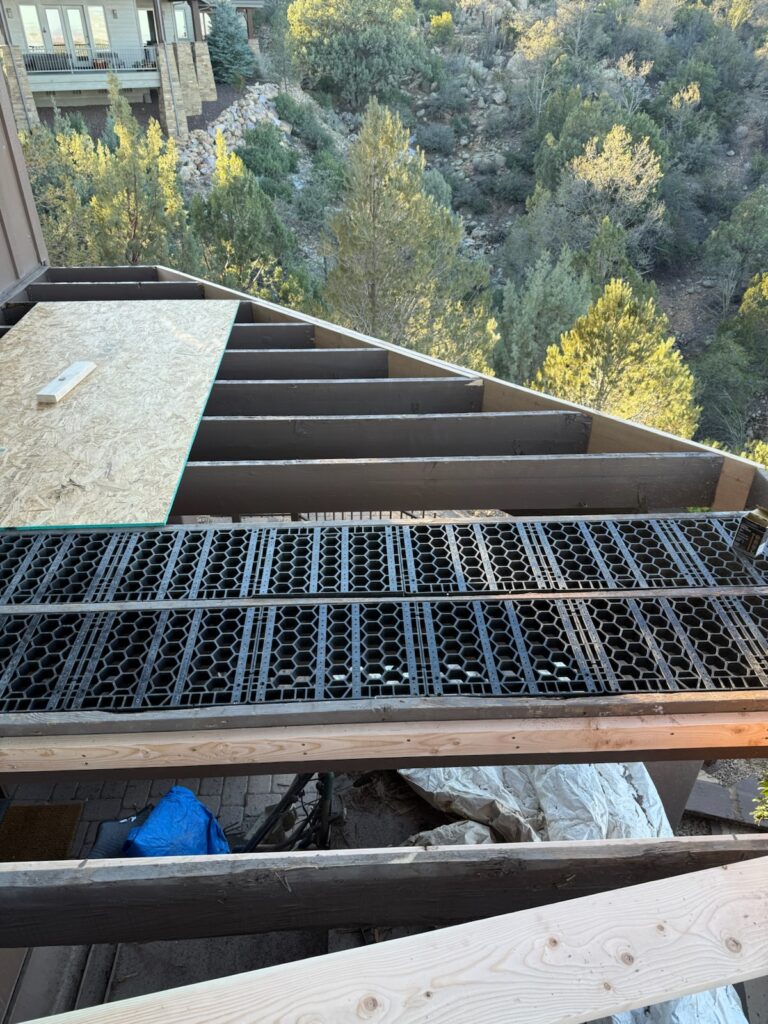
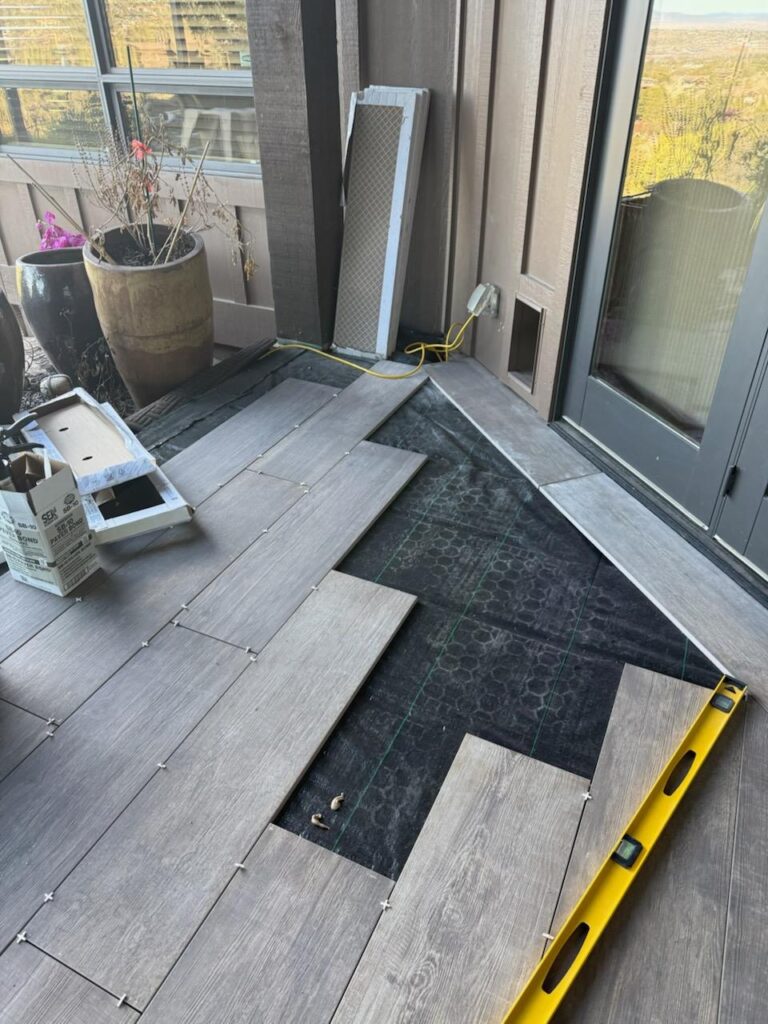
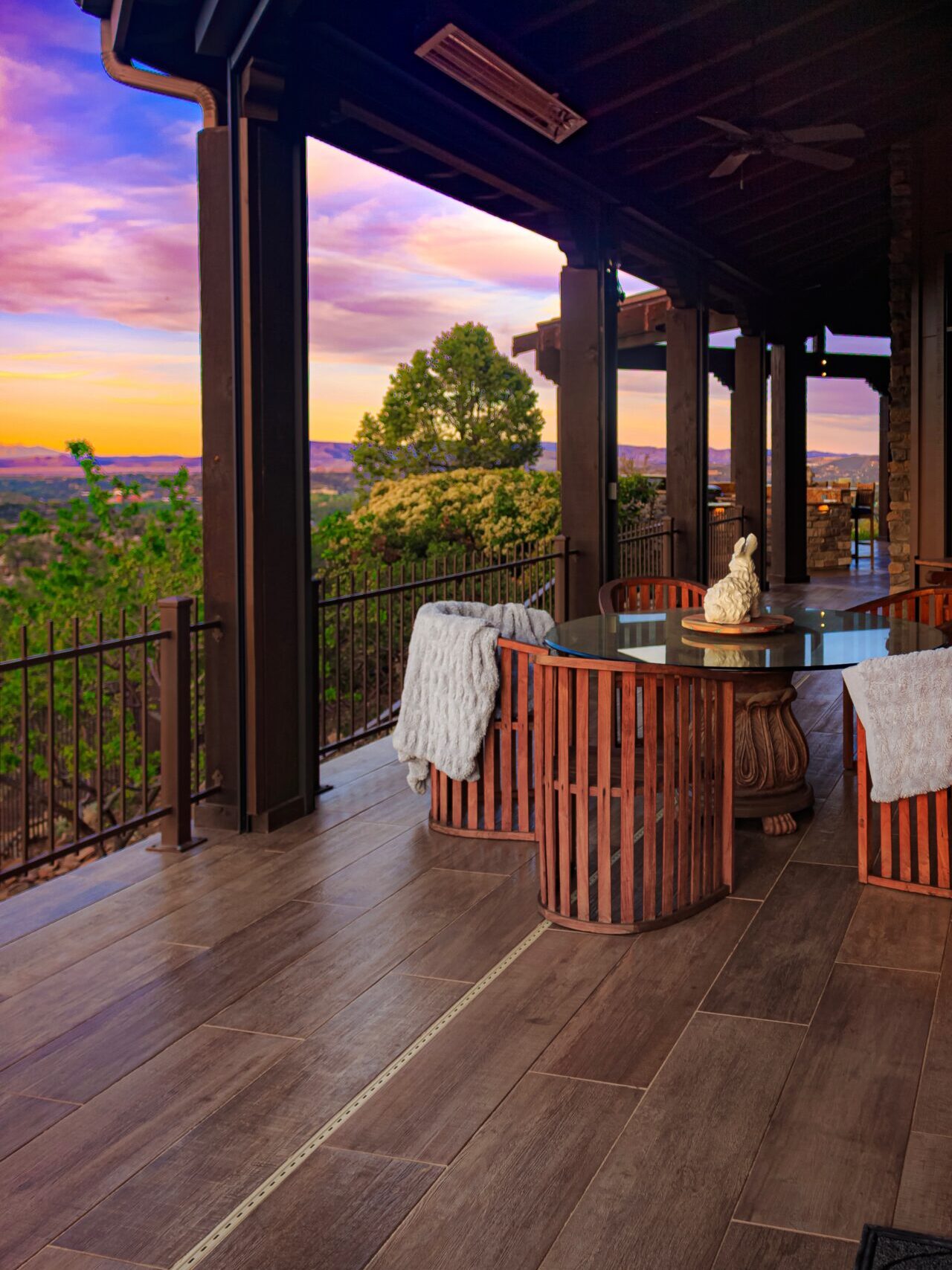
A good example of a different approach can be seen in the terraced deck project completed this year in Arizona by Creative Outdoors. The project uses woodgrain porcelain pavers to achieve a warm, natural look without relying on traditional decking boards.
Arizona is an environment where sun exposure is constant and intense, which makes it a useful comparison point. Instead of using a surface that can fade over time, this project uses porcelain pavers designed to hold their color even under heavy UV exposure. The result is a multi-level deck that maintains a consistent appearance across the entire space, without the uneven fading that often develops with composite materials.
It shows what happens when the goal shifts from short-term appearance to long-term stability. The surface is not just designed to look good when it is installed, but to keep that look over time.
A Different Approach to Deck Surfaces
For homeowners who want a surface that holds its appearance over time, it’s worth looking beyond board-based materials entirely. StoneDeks allows real stone, porcelain, or pavers to be installed over deck framing, creating a surface that is far less affected by UV exposure.
Unlike wood or composite boards, these materials do not rely on pigments that fade in the same way. They are designed for long-term outdoor use and maintain their appearance through sun, weather, and daily use without the same color shift concerns.
Choosing a Surface That Ages Well
Every deck material changes over time, but how it changes matters. Wood requires ongoing maintenance to preserve its look. Composite reduces maintenance but can still fade with sun exposure. Hardscape surfaces offer a different path by focusing on long-term stability in both performance and appearance.
If maintaining the original look of your deck is important, it may be worth considering a surface designed to handle long-term exposure without noticeable change.
Want a Deck Surface That Holds Its Color?
If you’re exploring options for a new deck surface or thinking about replacing an existing one, we can help you evaluate what makes the most sense for your space. StoneDeks is designed for homeowners who want a long-lasting surface without the ongoing maintenance or gradual fading.
Visit our contact page to get in touch. We’re ready to answer questions, walk through your options, and help you choose a solution that fits your project.