
The Promise of “Low Maintenance”
“Low maintenance” has become one of the most attractive promises in outdoor building materials. Homeowners hear it when researching decking, siding, roofing, and nearly every other exterior upgrade. The phrase suggests freedom from sanding, staining, sealing, and constant upkeep, which makes it easy to understand why it has become such a powerful selling point.
The problem is that low maintenance and long lasting are not the same thing. One reduces the amount of work required to care for a material. The other reflects how well that material performs and feels over long periods of time. When those two ideas are treated as interchangeable, homeowners can end up with outdoor spaces that are easier to maintain but still feel temporary.
What “Low Maintenance” Actually Means
Low maintenance materials are designed to reduce routine upkeep rather than eliminate aging or wear. In the world of decking, this usually refers to products that resist staining, fading, splintering, or insect damage more effectively than traditional wood. Composite boards are a good example because they remove the need for regular staining and can hold their appearance longer than untreated lumber.
That convenience has real value for homeowners who want to spend less time maintaining their outdoor space. However, maintenance reduction does not automatically translate into long-term permanence. A material can require very little upkeep while still showing wear, fading, or stylistic aging over time.
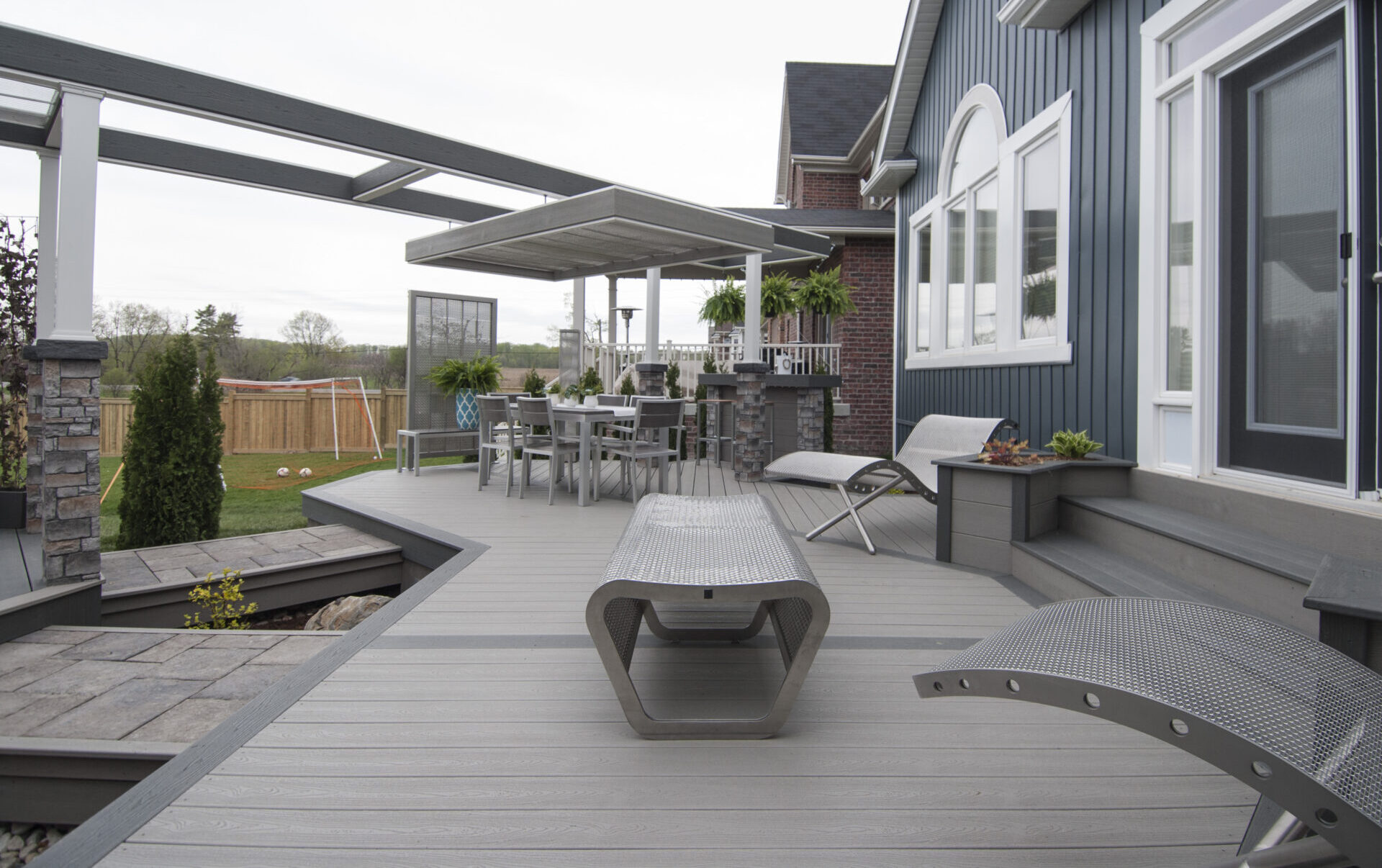
Board-style decking illustrates this distinction clearly. Even when the boards are durable, the design language still suggests a product that will eventually be replaced. Narrow planks, visible seams, and lightweight surfaces communicate maintenance cycles rather than permanence.
Why Longevity Feels Different
Longevity is not just about structural durability. It also includes how a material looks, feels, and ages over the life of the home. Materials like natural stone, porcelain tile, and concrete pavers carry a very different message because they have historically been used in applications designed to last for decades.
Those materials feel more substantial underfoot and create visual weight that board-style decking rarely achieves. They also age differently, often developing character rather than appearing worn or outdated. Because of that, they contribute to a sense of permanence that extends beyond maintenance schedules.
When a material communicates durability and longevity, the entire outdoor space begins to feel more integrated with the home’s architecture.
Rethinking the Way Outdoor Spaces Are Built
Outdoor living spaces now play a major role in how homes are experienced and valued. Patios, terraces, and decks are no longer treated as simple backyard features. They function as extensions of the interior and influence how buyers and homeowners perceive the property.
As expectations around outdoor living continue to rise, the difference between low maintenance and long lasting becomes more important. Materials that reduce upkeep can certainly make ownership easier, but they do not always create spaces that feel permanent or architecturally integrated.
Understanding that distinction helps homeowners make better decisions about the surfaces they choose. When outdoor materials are selected not only for convenience but also for durability and permanence, the result is a space that holds its value and its appeal for many years to come.
The Bigger Picture
Low maintenance materials solve an important problem, but they do not answer every design question. A space can require very little upkeep and still feel temporary if the materials suggest replacement cycles rather than longevity.
Long-lasting outdoor spaces begin with materials that communicate durability, weight, and permanence. When those qualities are present, the outdoor environment becomes more than a functional addition. It becomes a lasting part of the home itself.