What Changes and What Doesn’t
When builders first hear about installing real stone over deck framing, the assumption is usually that the entire project must change. Stone sounds like masonry, and masonry suggests slabs, block work, and a completely different type of construction. That assumption is what causes many contractors to dismiss the idea before they actually understand how the system works.
The reality is that most of the project stays exactly the same. The structure is still built like a deck, and the process still follows the same structural logic that deck builders already use every day. The only major difference is how the finished surface is installed once the frame is complete. Understanding where the process stays familiar and where it changes is what helps builders see how this type of project fits into their workflow.
The Structural Foundation Stays the Same
The structural side of the project follows standard deck construction principles. Builders still start with the same foundation elements that support any elevated deck. Footings are installed to support posts, posts carry beams, and beams support the joists that create the deck platform.
The structural design still revolves around load paths, span limits, and proper framing techniques. None of these fundamentals change simply because the finished surface will be stone instead of composite or wood. For a contractor who already understands deck framing, the structural portion of the job remains very familiar.
In most cases, the biggest difference at the structural level is planning for the final surface load earlier in the design process. That does not change the nature of the work, but it does mean builders approach the framing stage with the finished material already in mind.
The Job Site Workflow Remains Familiar
The overall job sequence also stays very similar to a standard deck build. The process still begins with layout, excavation for footings, and installation of the structural posts and beams. Once the primary structure is in place, joists are installed to create the framing grid that supports the finished surface.
From a crew standpoint, the early stages of the project feel almost identical to any other elevated deck. Carpenters are still performing the same framing tasks, using the same tools, and following the same inspection steps that govern typical deck construction.
That familiarity is important because it means builders are not reinventing their entire process. They are working within the same structural discipline that already defines their business.
The Surface Installation Is Where Things Change
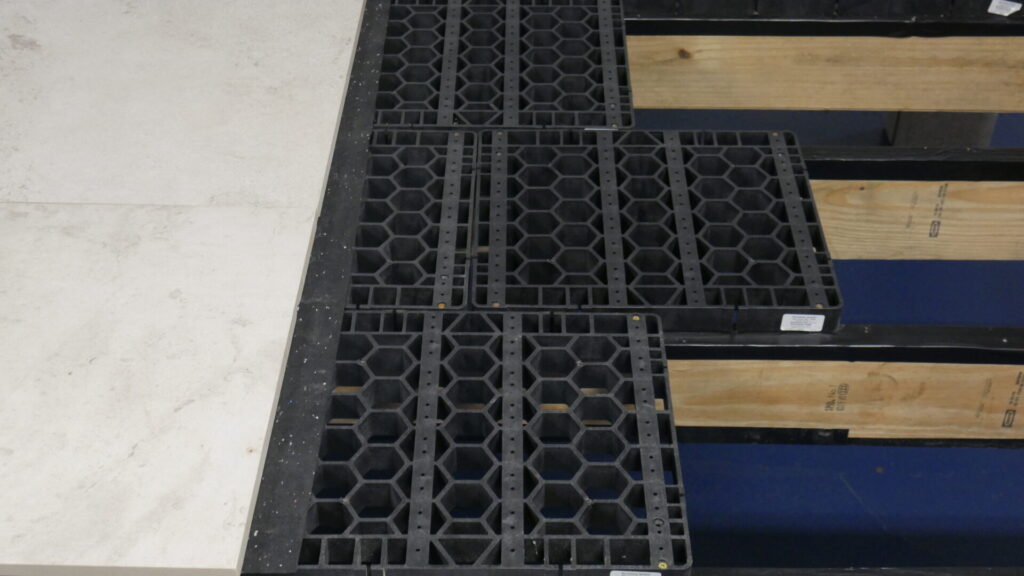
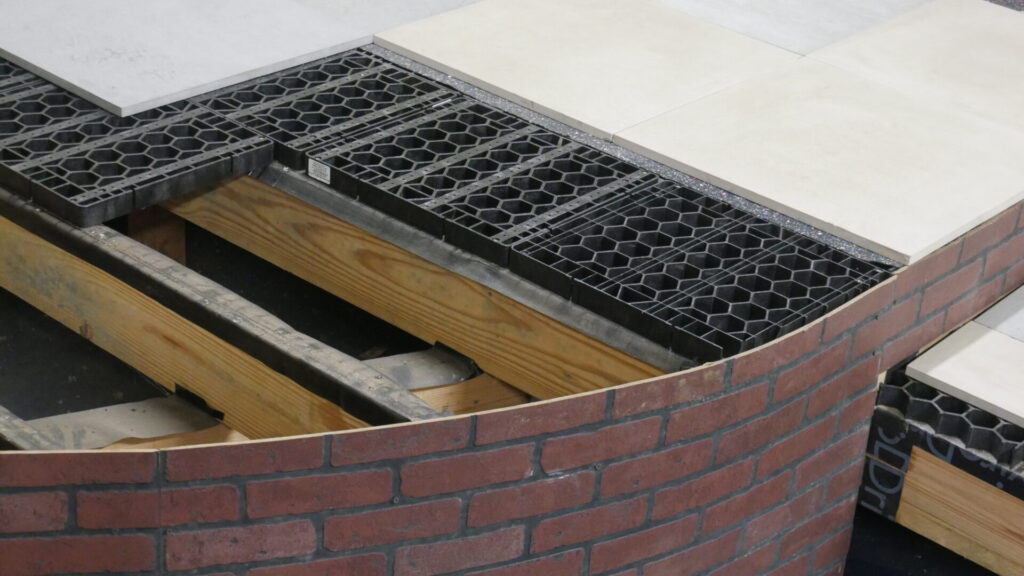
The primary difference between a traditional deck and a stone surface deck appears once the framing is complete. Instead of fastening decking boards directly to the joists, a specialized system is installed that supports stone or porcelain panels above the framing.
This system creates a layer that separates the deck structure from the finished surface. That separation allows water to drain properly and allows materials to move without stressing the framing or the stone itself. The system effectively bridges the gap between framed construction and a masonry style finish.
Because the surface installation follows a different method than typical decking, it does require some learning. However, it does not require builders to become masons or to adopt the full scope of traditional hardscape construction.
The Finished Product Changes the Category
While the structure and workflow remain largely the same, the finished result sits in a different category than a standard deck. A stone surface carries the visual weight and durability that homeowners typically associate with patios and masonry work. When that finish is placed on an elevated structure, it creates a hybrid that combines deck construction with hardscape aesthetics.
For builders, this shift changes how the project is perceived by clients. Instead of comparing different decking boards or railing packages, homeowners begin evaluating the project in terms of permanence, architectural finish, and long term durability.
That change often moves the conversation away from commodity materials and toward a more premium outdoor living space.
Why This Distinction Matters
Many contractors hesitate to explore stone surface decks because they believe it requires them to move into an entirely different trade. When the structure remains framed and the workflow remains familiar, the project stays within the domain of deck construction. The real shift occurs in how the finished surface is installed and how the project is positioned to the client.
Once builders understand that distinction, the opportunity becomes easier to evaluate. In practical terms, the fundamentals remain the same. Builders continue doing what they already know how to do well, which is framing strong and properly engineered deck structures. The difference is that the final surface opens the door to a new level of finish and a different category of outdoor space.