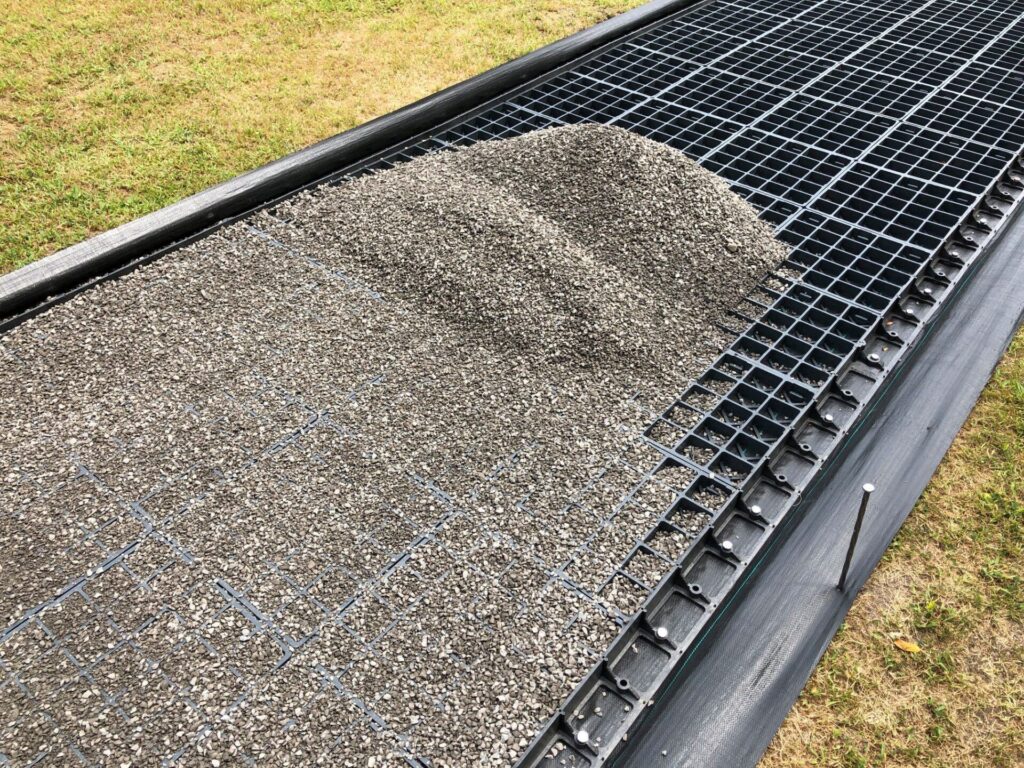
Why Stone Patios Move and What to Do Instead
When a stone patio shifts, most people assume the material failed. They blame the pavers, the stone, or the installer. In reality, the surface is rarely the problem. The ground underneath is.
If you have seen patios become uneven, edges separate, or walkways sink after a few seasons, you have seen soil movement at work. What looks like a surface issue is almost always a foundation issue. Before we talk about solutions, we need to talk about what is actually happening below the surface.
The Real Problem Is Soil Movement
Soil is not stable. It expands when it freezes and contracts when it dries. It softens when saturated and shifts over time under weight and weather.
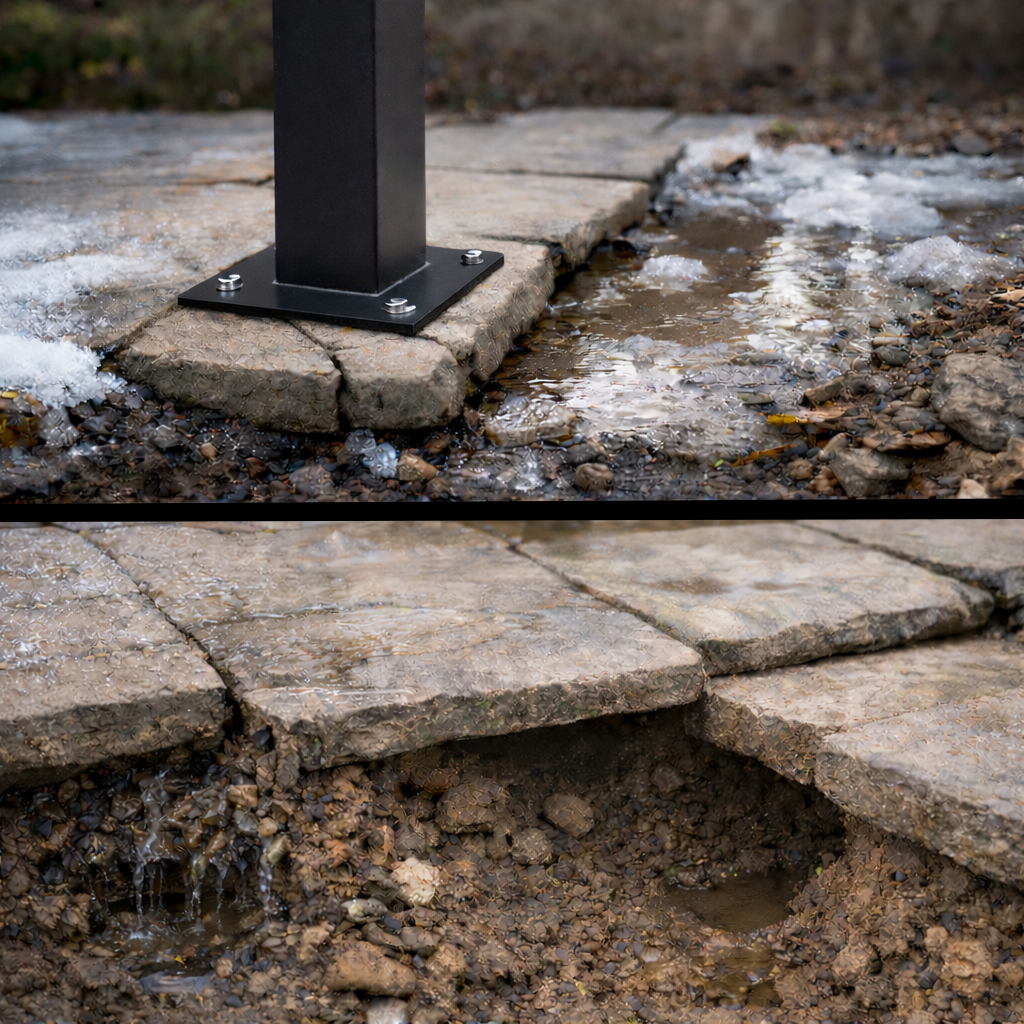
In colder climates, freeze and thaw cycles create upward pressure. This is known as frost heave. In wetter areas, water infiltration weakens the base. In clay-heavy soils, expansion and contraction can be dramatic.
Even when a contractor excavates and installs compacted gravel, that gravel is still sitting on soil that moves. Compaction reduces movement, but it does not eliminate it. Over time, the surface above begins to reflect what is happening underneath.
That is why patios that look perfect at installation can become uneven just a few years later.
Why Traditional Base Methods Fall Short
Most ground level stone installations rely on a layered system. Soil sits at the bottom. On top of that goes gravel. Then sand. Then stone or pavers.
Each layer behaves independently. Water moves through the system. The soil shifts. The gravel responds differently than the sand. The surface responds differently than the base.
Because the system is stacked rather than unified, it has built-in vulnerability. Movement at the bottom eventually shows up at the top. Maintenance becomes part of the lifecycle.
Concrete changes the equation but does not solve the root issue. Concrete is rigid. When soil shifts underneath it, the slab cracks because it cannot flex. You trade shifting for cracking, but you are still reacting to soil movement rather than preventing it.
A Different Approach to Ground Level Stability
SilcaSoil approaches the problem differently by changing the behavior of the ground itself. Instead of relying on loose layers, it transforms the prepared base into a unified structural mass.
The result is a monolithic foundation that resists settling, frost heave, and washout. Rather than sitting on material that can shift independently, the stone surface sits on a stabilized structure.
This is not about making the stone stronger. It is about making the ground stronger.
When the base behaves like structure instead of stacked material, the surface above remains flat and aligned. The goal is not short term performance. The goal is permanence.
What This Means for Homeowners
Most homeowners do not want to rebuild a patio every few years. They do not want to re-level pavers or deal with trip hazards after winter. They want an outdoor space that looks good and stays that way.
SilcaSoil supports a build it once mindset. It reduces the risk of seasonal movement and long term settling. It provides peace of mind that the investment in stone or porcelain will not be undermined by soil conditions.
This is especially important in freeze and thaw climates, areas with expansive soils, and environments with high moisture exposure such as pool decks and courtyards.
What This Means for Contractors and Designers
For contractors, stability at the base level reduces callbacks and protects reputation. When the ground is structurally stabilized, the risk of post installation movement drops significantly.
For designers, the integrity of layout and alignment is preserved. Clean lines remain clean. Large format porcelain and premium natural stone can be installed with greater confidence because the foundation supports the vision.
This is not a shortcut or a labor saving trick. It is a structural upgrade to the way ground level stone surfaces are built.
A Smarter Alternative to Compacted Gravel or Concrete
Compacted gravel slows movement but does not stop it. Concrete resists movement but cracks when soil shifts beneath it. Both methods work within the limitations of soil behavior rather than changing it.
SilcaSoil stabilizes the base so the surface above performs as intended. It allows stone to remain natural and beautiful without relying on a rigid slab or accepting long term shifting.
The result is a ground level stone surface that remains flat, aligned, and durable over time.
Build It Once
Outdoor living spaces are long term investments. They are gathering spaces and design statements that should not require constant correction.
When the ground beneath a patio is unstable, everything above it is at risk. When the ground becomes structural, the surface remains consistent.
Permanent stone surfaces begin with a permanent base. That is the shift.