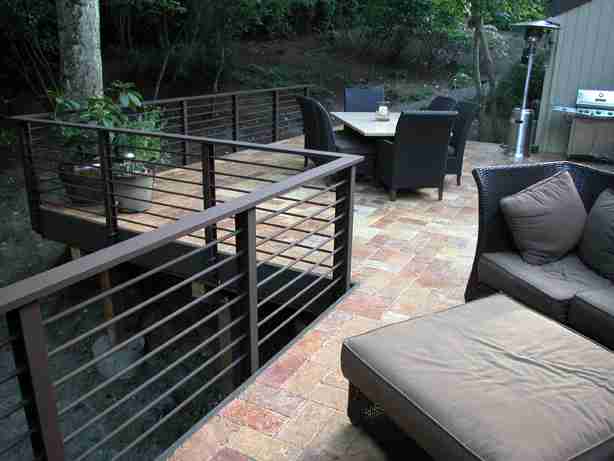
Two Outdoor Surfaces That Are Built Very Differently
Most homes include two types of outdoor living spaces. One is a patio built directly on the ground using materials like stone, brick, or concrete. The other is a deck built on framing using wood or composite boards.

Both have their place and both serve a purpose. Patios work well where grade conditions allow a surface to sit directly on soil or a compacted base. Decks solve the problem of elevation when the outdoor space needs to extend above the ground.
The challenge appears when a project requires both elevation and the material quality of a patio.
Why Decks and Patios Feel Different
The difference between these two outdoor surfaces is not just visual. It comes from the way they are built.
Patios rely on mass and stability. Materials like natural stone and pavers sit on a prepared base and create a surface that feels solid underfoot. Decks rely on framing. Joists support the structure and decking boards span across them to create the walking surface.
This difference affects how the space feels and how long the surface lasts. Research from the North American Deck and Railing Association shows that wood decking typically requires regular maintenance and eventual replacement as it weathers over time. That maintenance cycle is part of the reason many homeowners view patios as more permanent outdoor surfaces.
The Design Problem
When an outdoor space needs to be elevated, patios are often no longer an option. The project shifts toward framed construction and the surface usually becomes wood or composite decking.
This creates a material gap. Designers may want the permanence and appearance of stone, but the structure underneath the space is built like a deck.
For years, the only way to close that gap was to introduce a structural concrete slab or full masonry construction. While those systems remain excellent solutions for many applications, they also add weight, complexity, and construction sequencing that may not be necessary for every project.
A Different Way to Think About Deck Surfaces
An alternative approach is to treat the deck framing as the structure while using a structural panel system that allows stone or porcelain finishes to be installed above it.
In this type of assembly, the framing supports the loads while the structural panel layer distributes weight across the joists and creates the stable substrate required for rigid surface materials.
The result is a deck that can support real stone finishes while still being built on standard framing.
Concrete slabs and traditional masonry assemblies remain the right solution in many situations. The goal of this approach is simply to provide another option when elevation and structural conditions make those systems less practical.
Bridging the Gap Between Decks and Patios
Outdoor living spaces continue to evolve from simple platforms into fully designed extensions of the home. As these spaces become more integrated with the architecture, the materials used on the surface begin to matter more.
A deck assembly that can support stone helps bridge the gap between patios and traditional decks. It allows elevated outdoor spaces to achieve the solid feel and visual permanence that people often associate with masonry surfaces.
For designers and builders, that flexibility opens the door to new ways of thinking about outdoor structures.
Let’s Talk About Your Project
If you are exploring options for an elevated outdoor space and want to understand whether a stone deck system could work for your project, we would be happy to help.
Our team offers free consultations and can walk through the structural considerations, material options, and design approaches that may apply to your situation. Visit our contact page and reach out anytime. We are ready to help in whatever way is most useful for your project.