More Than A Deck
Most homeowners assume there are only two choices when it comes to outdoor living spaces. They think, “should I build a deck that sits above the yard, or should I build a stone patio at ground level?”
Because of that assumption, many people never even consider the possibility of using stone on an elevated structure. Few people question the limit because their aim is making the choice between wood and stone, high and low.
That way of thinking has shaped outdoor design for decades. Decks are expected to be made of wood or composite boards, while stone is reserved for patios that rest directly on the ground. If your home sits above grade or your backyard drops away from the house, the conversation usually stops there and a traditional deck becomes the default solution.
Why Traditional Decks Often Fall Short
Wood decks have long been the standard solution for elevated outdoor spaces because they are familiar and relatively straightforward to build. Builders know the system, materials are easy to source, and most homeowners have seen countless examples in their neighborhoods. The result is a structure that functions well but often feels separate from the architectural character of the home.
Over time the shortcomings become more noticeable. Wood fades, stains wear down, and boards eventually warp or crack. Even newer composite materials, while more durable, still carry the visual language of a typical deck and rarely deliver the same sense of permanence that natural materials provide.
For homeowners who care about design, this creates a frustrating disconnect. A home might feature beautiful stonework, thoughtful landscaping, and carefully chosen architectural materials, yet the outdoor living space attached to it still looks like a standard deck.
A Different Approach to Elevated Outdoor Living
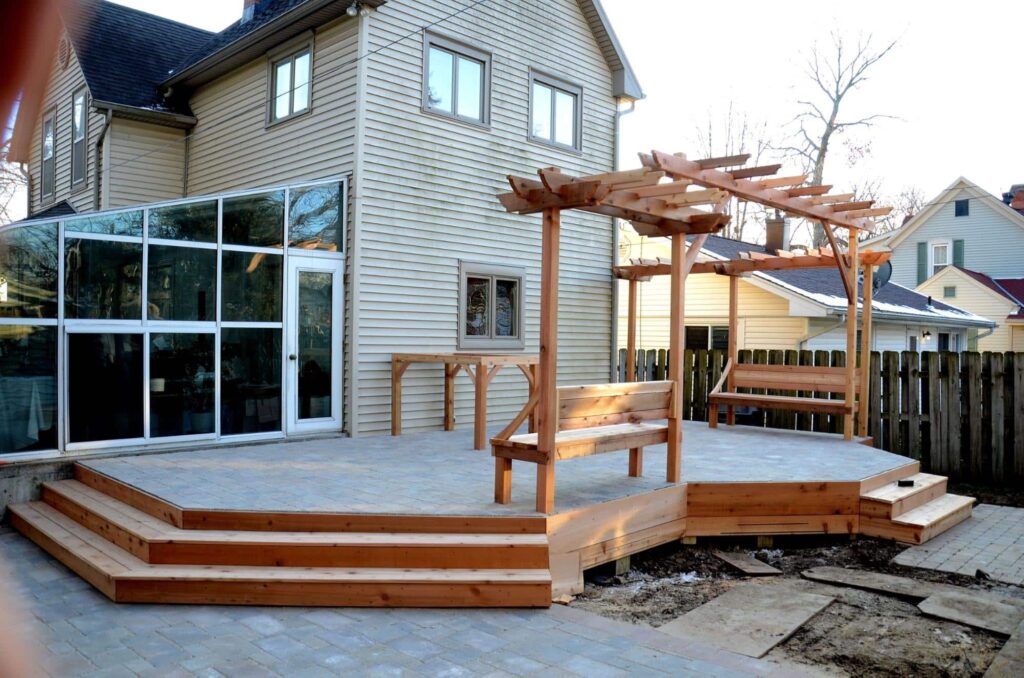
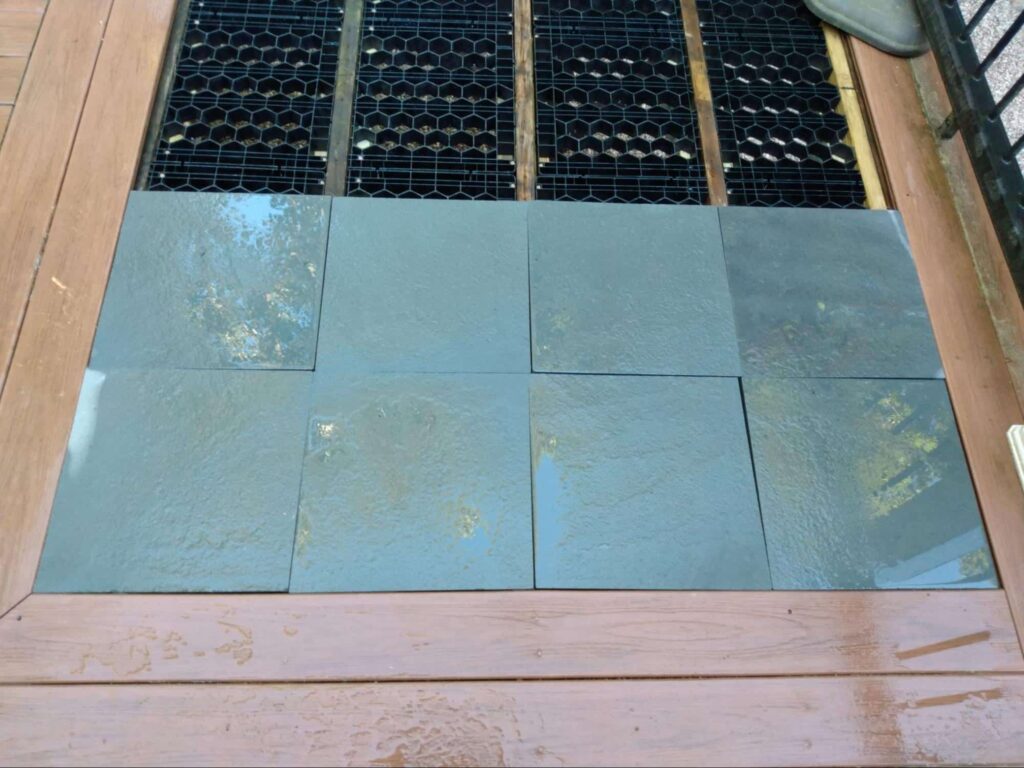
Advances in deck surface systems have opened the door to something many homeowners never thought possible. Natural stone, porcelain pavers, and architectural slabs can now be installed over standard deck framing in a way that performs properly and maintains the structural integrity of the deck.
The result is an elevated outdoor space that feels much closer to a terrace or patio than a traditional deck. Instead of wood boards underfoot, the surface becomes a clean grid of stone or porcelain that complements the materials used throughout the rest of the home. The space suddenly feels intentional and architectural rather than purely functional.
For many homeowners the reaction is immediate because it reframes what they thought their options were. The moment they see it, the idea clicks into place and the outdoor space begins to feel like a natural extension of the home instead of an add on.
Why Design Driven Homeowners Are Making the Switch
One of the biggest reasons people explore stone surfaces for their decks is simple aesthetics. Stone and porcelain have a visual weight and permanence that immediately elevates the space. The deck begins to resemble an outdoor room rather than a platform attached to the back of the house.
Durability is another major factor. Natural stone and porcelain surfaces resist many of the issues that plague wood decking, including splintering, fading, and ongoing refinishing cycles. While every outdoor surface requires care over time, these materials tend to age more gracefully and maintain their appearance for far longer.
There is also the matter of long term value. Outdoor living spaces have become one of the most important elements buyers look for in a home, and materials that feel substantial and permanent often make a stronger impression. When a deck looks like a thoughtfully designed terrace rather than a typical wood structure, it changes how the entire backyard is perceived.
Transforming an Existing Deck
In many cases the opportunity does not require building a completely new structure. Homes that already have a solid deck frame may simply need a surface transformation to unlock the full potential of the space.
When aging deck boards are removed, the underlying structure can often support a new surface system designed specifically for stone or porcelain. The framing remains in place while the surface above it is completely reimagined. What was once a standard wood deck becomes something far more substantial and visually refined.
Homeowners are often surprised by how dramatic the change can be. The view from the house improves, the materials feel more cohesive with the rest of the architecture, and the outdoor space becomes a place people genuinely want to spend time.
Tell Us About Your Dream Deck!
Every home presents its own opportunities and limitations, which is why the best place to start is a simple conversation. Some projects involve upgrading an existing deck, while others begin with designing a completely new outdoor living space that better fits the home and landscape.
Understanding what is possible requires looking at the structure, the layout of the yard, and the goals for how the space will be used. With the right approach, many homeowners discover that their outdoor area can become something far more beautiful and durable than they originally expected.
If you are curious about what your deck could become, we invite you to reach out and join the conversation. We offer free consultations to help homeowners explore their options, understand the possibilities, and decide whether a stone or porcelain deck surface makes sense for their home. Contact us today to schedule your free consultation and see what your outdoor space is truly capable of becoming.