
Walk Smart, Walk Safe
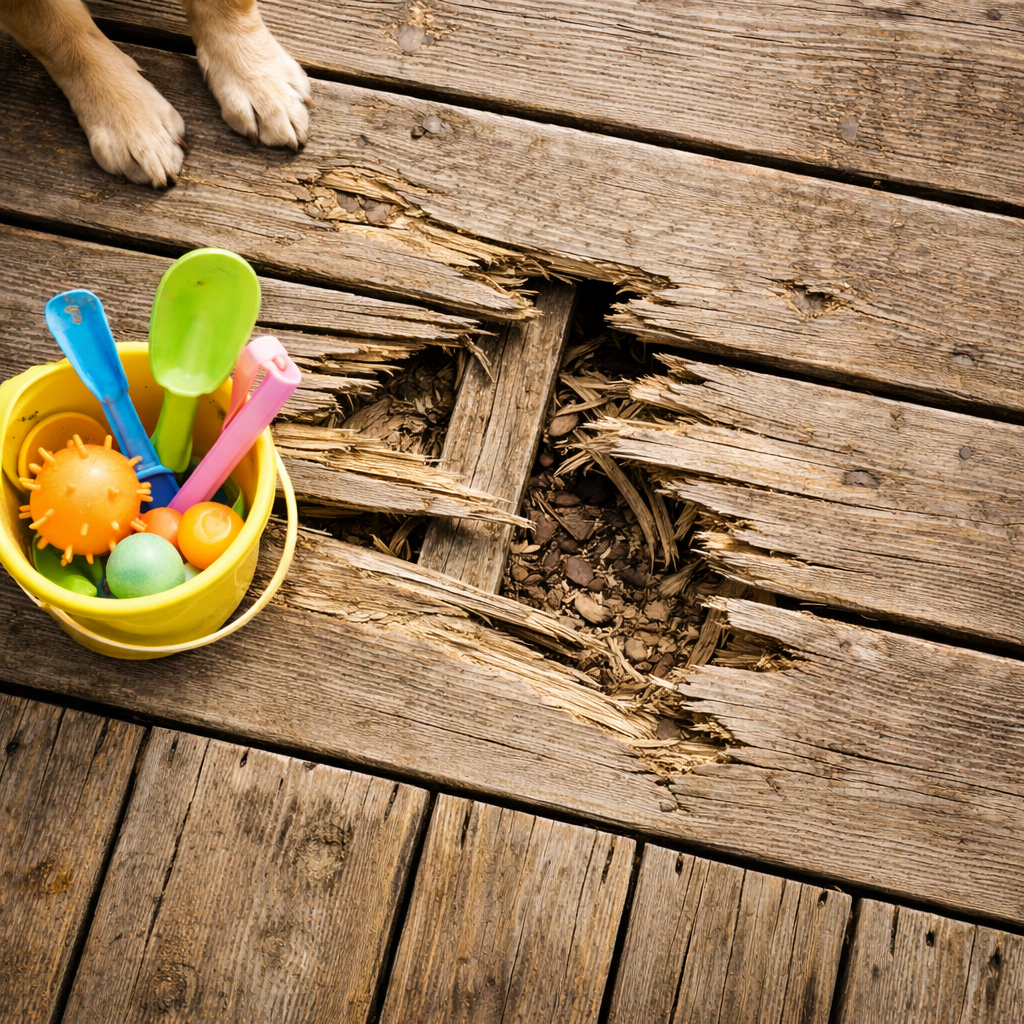
Most deck problems begin at the surface. The boards take the full impact of sun, rain, snow, and daily foot traffic, and over time even well-built decks begin to show wear. When boards start to deteriorate, the deck can become uncomfortable to use, difficult to maintain, and in some cases unsafe to walk on.
If your deck is more than ten or fifteen years old, it is worth paying close attention to the condition of the decking boards themselves. The following warning signs are all indicators that the surface of your deck may be reaching the end of its lifespan.
1. Splintering Boards
Splinters are one of the most common problems with aging wood decks. As boards dry out and weather over time, the grain begins to separate and small shards of wood start to lift from the surface. This can make walking barefoot uncomfortable and potentially dangerous, especially for children and pets.
While sanding and refinishing can temporarily reduce splinters, the problem usually returns as the boards continue to age. Once splintering becomes widespread, it is often a sign that the surface material itself is wearing out.
2. Cracking and Splitting
Wood boards expand and contract constantly as temperatures change. Over many seasons, this movement causes cracks and splits to form along the grain. Some boards develop large visible cracks while others begin to separate at the ends near the fasteners.
These cracks allow water to penetrate deeper into the wood, accelerating deterioration and weakening the boards over time. When multiple boards show splitting, the surface of the deck is usually nearing the point where replacement makes more sense than continued repairs.
3. Warped or Cupped Boards
Another common sign of aging decking is warping or cupping. Boards may begin to curve upward at the edges or twist slightly along their length, creating uneven walking surfaces and gaps between boards.
Warped boards not only affect appearance but can also create tripping hazards. As more boards begin to distort, maintaining a smooth and level deck surface becomes increasingly difficult.
4. Soft or Deteriorating Wood
Deck boards that feel soft underfoot are often suffering from moisture damage. Over time, water can seep into cracks and begin breaking down the wood fibers inside the board. This deterioration can cause boards to feel spongy or weak in certain areas.
Once this type of deterioration begins, it rarely affects only a single board. Moisture exposure typically spreads the problem across multiple sections of the deck surface.
5. Loose or Popped Fasteners
As boards age and expand, fasteners can begin to loosen or push upward from the wood. Screws and nails that once sat flush may begin sticking up slightly, creating both safety and maintenance concerns.
Loose fasteners are often a symptom of boards losing their structural integrity. As the wood weakens, it can no longer hold hardware securely.
6. Fading, Staining, and Weather Damage
Years of sun exposure gradually break down the protective fibers in wood decking. Boards begin to fade unevenly, develop dark stains, or show rough, weathered surfaces. Even with regular staining and sealing, older decks often require increasing maintenance just to maintain a presentable appearance.
When the surface reaches this stage, homeowners often find themselves repeating the same maintenance cycle every year just to keep the deck usable.
7. Constant Maintenance
Perhaps the biggest warning sign is when maintaining the deck becomes a constant project. Sanding, sealing, staining, and replacing boards can quickly become an annual routine. At some point, the effort required to maintain the surface outweighs the value of continuing to repair it.
When maintenance becomes ongoing, many homeowners begin looking for a more permanent solution.
The Upgrading Conversation
If several of these warning signs are present, it usually means the decking boards themselves have reached the end of their lifespan. Instead of continuing to repair or replace individual boards, it may make more sense to replace the surface entirely.
Allow us to present a different approach. Rather than installing another wood deck that will eventually experience the same issues, StoneDeks allows real stone, porcelain, or pavers to be installed over deck framing. The result is a durable stone surface that eliminates splinters, reduces maintenance, and dramatically improves the longevity of the deck.
For homeowners tired of dealing with aging wood boards, upgrading the surface with StoneDeks can transform the deck into a space that is built to last. If you have any other questions, we would love to hear from you. Consultations are always free! And we always carefully examine the deck frame to make sure it’s fit for the product. Reach out to StoneDeks to learn more about surfacing and your deck’s individual needs.