Why This Question Comes Up in the First Place
When most deck builders first hear about installing real stone over framing, their instinct is to treat it as masonry work. Stone has always belonged to patios, slabs, retaining walls, and other ground supported structures, so it feels natural to assume that once stone enters the conversation the project shifts into hardscape territory. That assumption is exactly where confusion begins, and it is also where many contractors step away from an opportunity that actually fits within their existing skill set.
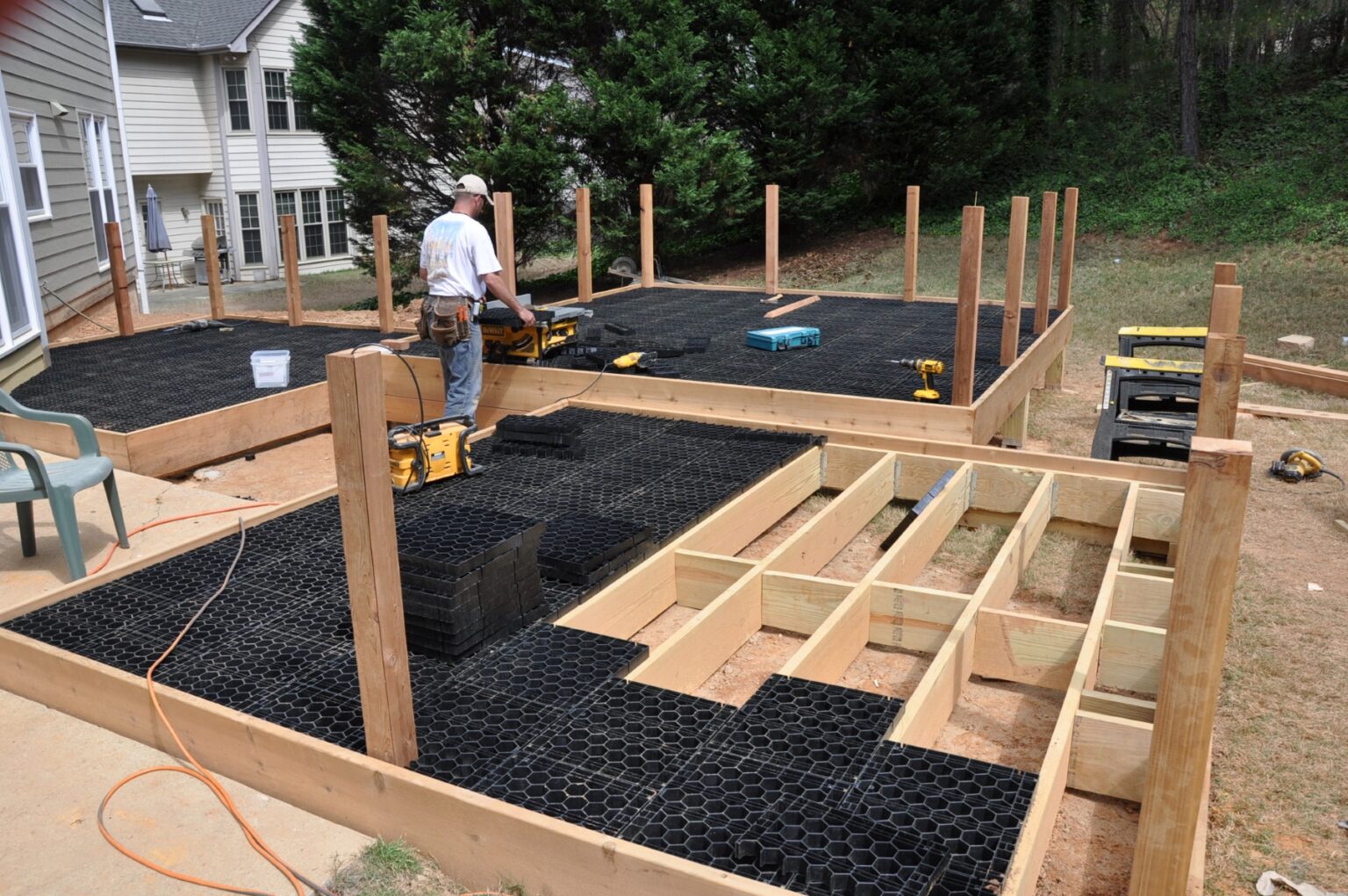
The better way to approach this question is to separate structure from surface. A hardscape project is defined primarily by how it is supported and constructed at the structural level. If a project relies on compacted base, reinforced concrete, or masonry walls for support, then it belongs in the hardscape category. If a project relies on footings, posts, beams, and joists to create an elevated platform attached to or adjacent to a home, then it is functioning as a deck regardless of what material finishes the top.
What Actually Defines a Deck Project
A stone surface deck remains a deck project because the underlying structure follows traditional deck framing principles. The load paths run through posts and beams into footings just as they would in any elevated wood or composite deck. The engineering considerations focus on spans, deflection, and structural capacity in a way that is completely familiar to experienced deck builders.
Nothing about that structural framework requires a shift into slab construction or masonry wall systems. The project continues to rely on the same structural logic that governs every other elevated deck. As long as the platform is framed, elevated, and supported by footings and beams, it remains within the discipline of deck construction.
What Changes and Why It Works
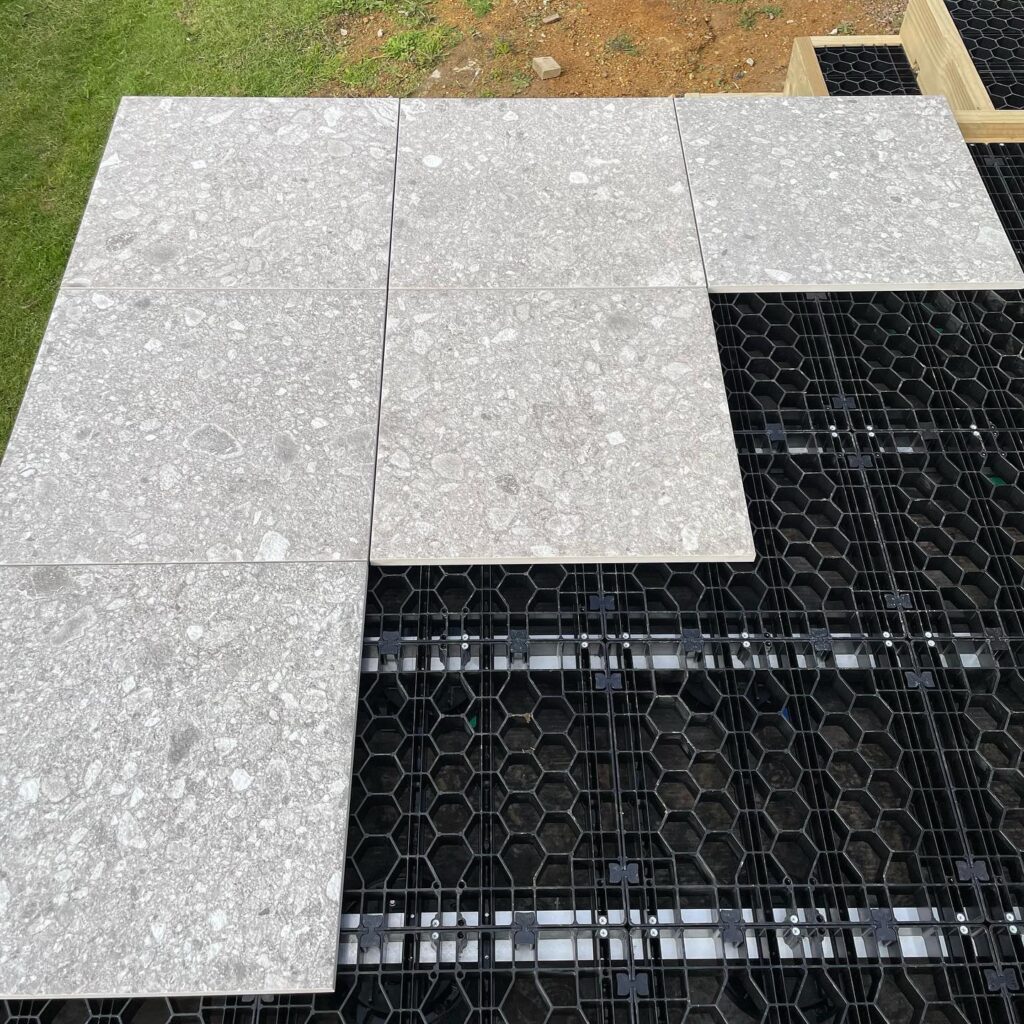
What changes in this scenario is the finished surface and the method used to support it. Instead of fastening wood or composite boards directly to the joists, a purpose built system is installed over the framing that is designed to carry stone or porcelain panels. That system separates the structural deck from the finished surface so that drainage and movement are properly managed.
This separation is critical because traditional masonry over wood framing has historically led to problems. Bonding stone directly to a wood structure creates tension between materials that expand and contract at different rates, and it does not allow for effective drainage in elevated conditions. A properly engineered surface system eliminates that conflict by acknowledging that framed construction behaves differently than ground supported construction.
When the system is installed according to specification, the result is a deck structure that supports a stone finish without relying on improvised solutions. The frame handles structural loads while the surface assembly handles water management and material performance. Each layer performs a defined role, which increases predictability and reduces risk.
Why Builders Hesitate and Why They Should Reevaluate
The question of whether this is a deck or a hardscape project often comes down to identity and risk perception. Contractors hesitate because they do not want to assume liability for work that falls outside their expertise. When the structure remains framed and engineered as a deck, the project stays within the builder’s core competency.
From a workflow standpoint, most of the job feels familiar to a deck contractor. The site layout, footing placement, framing sequence, and inspection process follow patterns that builders already understand. The additional training required focuses on the surface installation rather than on learning an entirely new construction category.
Understanding this distinction also changes how the project is positioned and priced. When builders view it as a deck project with a premium finish, they approach it with the same structural confidence they bring to any elevated build. The difference is that the finished product enters a higher design category and often commands stronger margins.
The Final Answer
In practical terms, a stone surface deck is not a hardscape project unless the structural system itself shifts into hardscape construction. As long as the platform relies on deck framing principles and elevated support, it remains part of the deck builder’s domain. The surface material expands what the deck can become, but it does not redefine the fundamental nature of the project.
For builders who are willing to look past the initial assumption that stone equals masonry, the opportunity becomes clearer. The skills that define a professional deck contractor remain central to the job. The structure stays within the discipline they know well, while the finish elevates the category of work they can offer.
Seen through that lens, the question answers itself. A framed, elevated platform supported by footings and beams is a deck. When that deck carries a properly supported stone surface, it becomes an expanded version of the same category rather than a departure from it.