The Problem Most Decks Start With
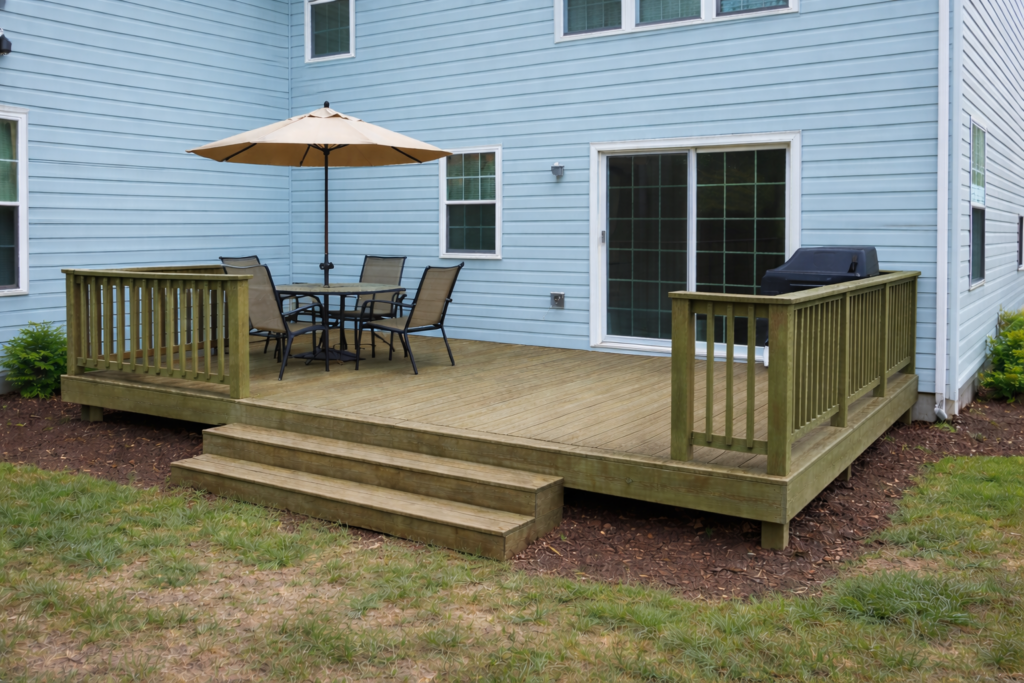
Walk into almost any backyard and you will notice the same thing. The house often feels solid and thoughtfully designed, but you can tell the deck attached to it was added later.
Even when the deck is new, freshly stained, and well built, it can still feel separate from the architecture of the home. This happens because decks are usually approached as construction projects instead of design projects.
The goal becomes building a platform outside the back door rather than creating a space that visually belongs with the rest of the house. When that mindset shapes the project from the beginning, the finished deck tends to feel temporary or disconnected.
Why Decks Often Feel Disconnected
One of the biggest reasons decks feel like add ons is the materials used to build them. Wood and composite boards are practical and widely available, but they often do not share the same visual language as the home they are attached to. A house might feature brick, stone, or carefully chosen architectural materials, while the deck is made from narrow horizontal boards that immediately signal something different.
Scale and proportion also play a role. Decks are frequently designed around structural requirements rather than aesthetics, which can lead to awkward shapes or oversized platforms. When the layout does not relate well to the house or the surrounding yard, the structure begins to feel more like a stage than an integrated outdoor living space.
Another common issue is the transition between the house and the deck. When the doorway opens directly onto a simple platform with railings and boards, the change from indoor to outdoor space can feel abrupt. Instead of creating a natural extension of the home, the deck becomes a separate zone that happens to be attached to the back wall.
What Makes an Outdoor Space Feel Integrated
Outdoor spaces that feel intentional usually start with the same question architects ask when designing interiors. How should this space relate to the rest of the house? When that question guides the design, the deck becomes part of a larger architectural conversation rather than a purely functional structure.
Material choice is one of the most powerful ways to create this connection. Surfaces that echo or complement the materials used on the home help the outdoor space feel grounded and permanent. When the deck surface feels substantial and visually aligned with the architecture, the entire backyard begins to feel more cohesive.
Layout matters just as much as materials. A well designed deck aligns with the doors, windows, and lines of the house, creating a sense that the outdoor space was always meant to be there. Furniture, lighting, and landscaping then reinforce that feeling by treating the deck as a true extension of the home rather than a separate platform.
Rethinking the Deck
Many homeowners assume that the only way to improve a deck is to replace aging boards or update the railings. While those upgrades can refresh the appearance of the structure, they rarely change the underlying feeling that the deck was added after the fact. A more meaningful transformation happens when the space is reconsidered as part of the home’s overall design. When materials, layout, and architectural connection are taken seriously, the deck stops looking like an attachment and begins to feel like a natural continuation of the house itself.
If your deck feels disconnected from the rest of your home, it may be time to explore what a thoughtful redesign could accomplish. We offer free consultations to help homeowners evaluate their outdoor spaces and understand what improvements are possible. Reach out to start the conversation and see how your deck could become a seamless part of your home rather than something that looks like it was simply added on.
For many homeowners, the biggest change comes from rethinking the surface itself. StoneDeks is a system that allows natural stone, porcelain, or architectural pavers to be installed over standard deck framing, transforming an ordinary wood deck into a far more substantial outdoor space. Instead of replacing boards every few years, your deck can become a durable, architectural surface that feels integrated with the rest of your home. If you are curious about whether your existing deck could support a transformation like this, reach out to schedule a free consultation and we will walk you through the possibilities.